People with disabilities continue to face significant barriers to employment around the world, with the gap particularly pronounced in many low- and middle-income countries. In Uganda, the unemployment rate among people with disabilities is reported to be almost 30% higher than among people without disabilities.
In response, United Persons with Disabilities (UPDS), Virginia Commonwealth University’s Rehabilitation Research and Training Center (VCURRTC), and Kyambogo University Faculty of Special Needs and Rehabilitation (FSNR) have partnered to deliver the Employment-First Policy and Practice course. The course seeks to strengthen knowledge and encourage more inclusive and sustainable approaches to employment, particularly in low- and middle-income countries.
The course introduces participants to the history and evolution of Employment First policy and practice in the United States, exploring how the approach developed, lessons from its implementation, and how these lessons can inform disability-inclusive employment in other contexts.
Delivered virtually through Kyambogo University’s E-Learning Management System (KELMS), the six-month course ran from July to December 2024, providing 18 contact hours. It combined flexible, self-guided learning materials with presentations, live interactive sessions and an end-of-course assignment.
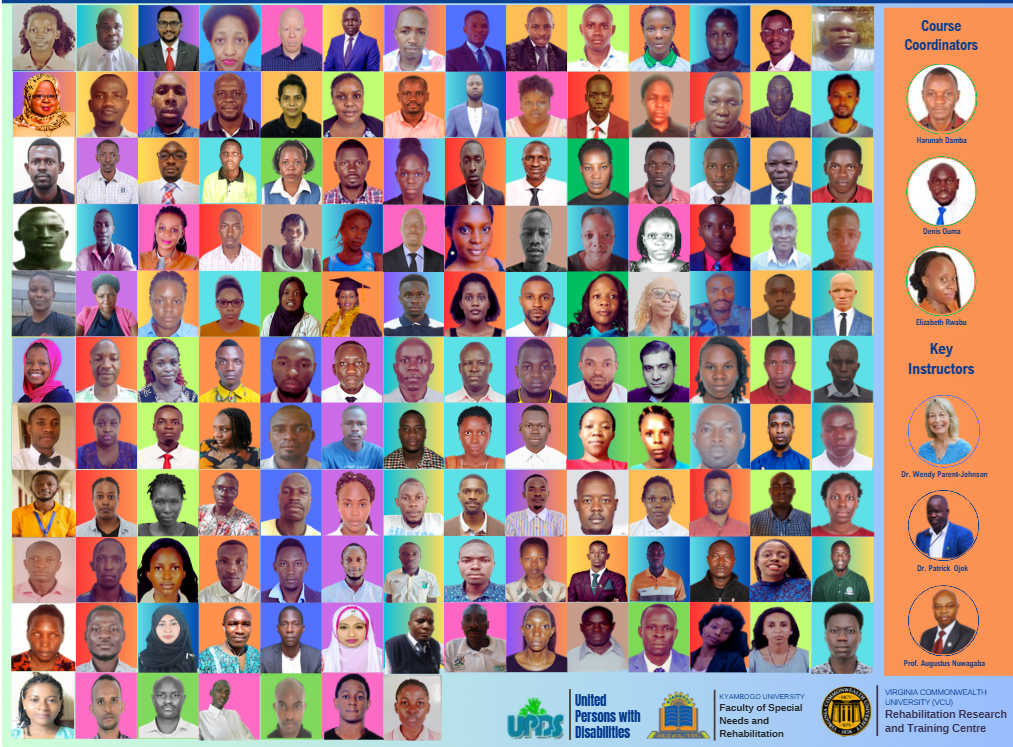
The first cohort brought together 157 participants from 13 countries, including students, government and private-sector employers, disability leaders, legal professionals, and others interested in advancing disability-inclusive employment. Participation was free of charge.
Participants who completed the course received certificates of completion. More importantly, the course created a space for people from different sectors and countries to learn together, exchange experiences, and consider how Employment First principles could help expand meaningful employment opportunities for people with disabilities in their own communities.