
Expanding employment opportunities for persons with disabilities
This course considers how Uganda’s disability employment policies can be translated into effective practice, drawing on the U.S. Employment First policy to examine the systems and strategies needed, and the challenges to be addressed, to support progressive policy implementation in Uganda.
Make a meaningful contribution to inclusive employment for people with disabilities by building the knowledge and confidence to turn policy into practice.
Around the world, people with disabilities are twice as likely to be unemployed compared to those without disabilities. In many developing countries, such as Uganda, only 1 in 10 people with disabilities have access to decent, formal employment. While this is concerning, many employers, civil society organizations, and the government have shown little concern about this alarming issue and have not adequately addressed the employment equity issues faced by people with disabilities.
EFPP101 will be of particular interest to students, self-advocates, disability rights activists, inclusive employment practitioners, and those working in NGOs, social services, or policy roles. The course is also valuable for anyone seeking to understand how employment policy can be used as a tool for advancing disability inclusion. Drawing on real-world case studies from the U.S. and beyond, the course equips you with practical tools to bridge the gap between policy and practice. In addition to understanding how disability employment systems work, you’ll reflect on issues like person-centered approaches, strength-based approaches, self-determination, and intersectionality. You’ll also build confidence in using your voice to influence decisions and promote inclusive change. Graduates of this course will be better prepared to advocate for effective, inclusive employment systems and to help shift the narrative from "support" to "opportunity."
I was privileged to attend the course free of charge. The knowledge I gained has been truly eye-opening. I have started to think more and more creatively about the many ways to support people with disabilities in my community. I am confident that the newfound knowledge I have acquired will help me make a positive impact.
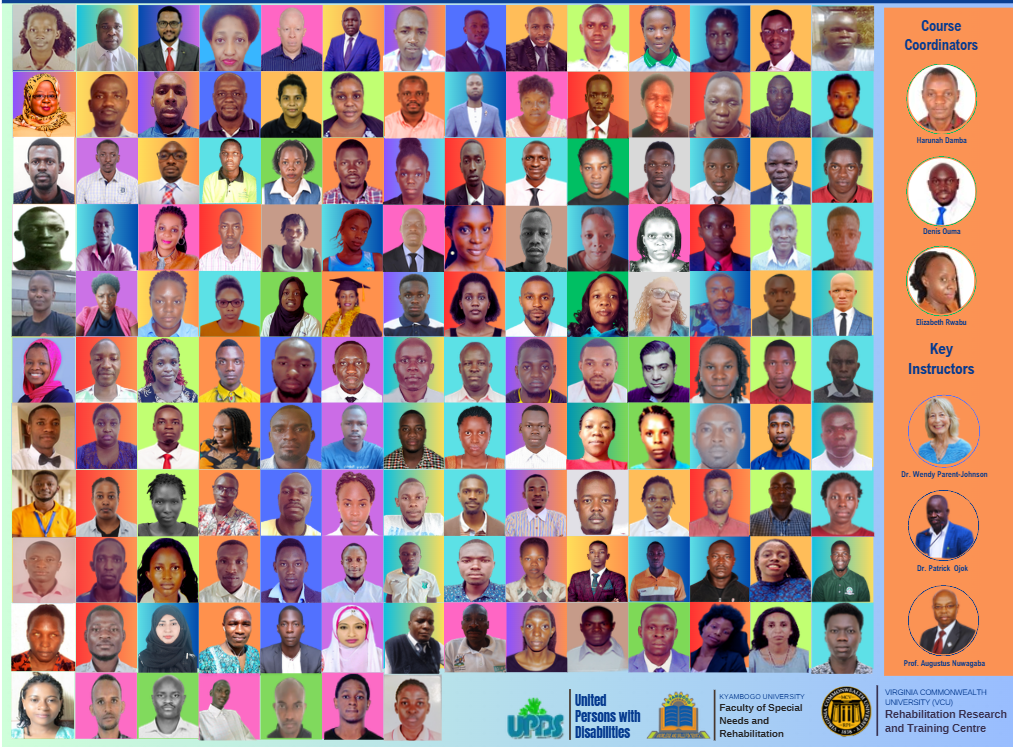
Participants enrolled in the course
Participants from Low- and middle-income countries
25% Male
75% Female
The module will explore contemporary employment policy debates in Uganda, focusing on inclusion, unemployment, informality, and decent work. Case studies will examine national initiatives and how international frameworks shape policy responses. Students will develop skills in policy analysis and critique, with particular attention to implementation challenges, institutional roles, and how socio-economic and political factors shape employment outcomes.
This module will examine leading employment models and innovations from the U.S. that promote inclusive, competitive, and creative work opportunities for people with disabilities. Through case studies and program evaluations, students will explore strategies such as customized employment, employer partnerships, and person-centered planning. Key lessons will focus on systems change, scalable practices, and policy mechanisms that can inform adaptation in other contexts.
The module will focus on person-centered planning as a foundational strategy for inclusive employment, emphasizing strengths-based assessment and self-determination. Students will explore tools and techniques that prioritize individual goals, talents, and support needs. Case examples will demonstrate how tailored planning drives successful employment outcomes. Emphasis will be placed on collaborative planning processes, the role of families and support networks, and aligning services with individual aspirations.
The module will examine pathways that support youth with disabilities in transitioning from school to employment, focusing on early career exploration, skills development, and inclusive post-secondary education. Students will analyze effective transition planning practices, work-based learning models, and the role of vocational training. Emphasis will be placed on collaboration across education, families, and employment services to ensure meaningful career preparation and long-term success.
This module will explore the critical supports that ensure long-term success in the workplace after hiring. Students will examine strategies for effective onboarding, on-the-job training, and the provision of reasonable accommodations. Case examples will highlight models of supported and customized employment, the role of job coaches, and workplace problem-solving. Emphasis will be placed on promoting independence, retention, and inclusive workplace practices.
This module will focus on understanding and leveraging disability employment quota systems to promote workforce inclusion. Students will examine policy design, implementation challenges, and advocacy strategies to strengthen quota effectiveness. Case studies will highlight successful campaigns and policy changes that have increased employment opportunities for persons with disabilities.
This module will focus on strategies for building effective relationships with employers to expand inclusive employment opportunities. Students will explore approaches to job development, employer engagement, and customizing roles to match individual strengths. Case studies will highlight successful business partnerships, workplace accommodations, and the economic benefits of inclusive hiring. Emphasis will be placed on addressing employer concerns, promoting disability confidence, and sustaining long-term collaboration.
This module will teach students how to collect and analyze data to demonstrate the impact of employment initiatives. It will cover combining quantitative data with narrative-based assessments to create compelling policy briefs and reports. Students will learn effective strategies for communicating findings to diverse audiences, influencing policy, and promoting best practices through targeted dissemination.
This module will explore the principles of self-advocacy and self-determination through the lived experiences of people with disabilities. Case studies and personal narratives will highlight how individuals navigate systems, assert their rights, and shape their own employment journeys. Students will examine strategies to support empowerment, choice, and control, and critically assess the role of service providers, families, and policy in enabling or hindering self-directed pathways.
This module will showcase real-life success stories of individuals thriving in competitive employment and self-employment. Through personal narratives and case studies, students will gain insight into overcoming barriers, leveraging strengths, and navigating workplace challenges. The module highlights diverse pathways to economic independence and the critical factors that contribute to sustained employment and entrepreneurship.
This module will focus on strategies to mobilize resources for sustainable employment initiatives. Students will explore how to engage diverse partners, build effective teams, and secure funding from public and private sources. Case studies will highlight successful collaborations and innovative financing models that support inclusive employment programs. Emphasis will be placed on leveraging community assets and creating multi-sector partnerships.
This capstone module offers students the opportunity to engage in an in-depth, independent project focused on a specific area within Employment First policy and practice. Students will either select from a range of proposed topics aligned with current priorities in inclusive employment, or, in consultation with an adviser, design and develop a project of their own. Through one-to-one supervision, students will build advanced skills in project planning, literature review techniques, stakeholder engagement, data collection and analysis methods, and effective policy writing and advocacy strategies. By the end of the module, students will have produced a critical, well-structured capstone paper or practical output (e.g. policy brief, implementation strategy, case study report) that demonstrates their ability to integrate theory, policy, and practice in advancing inclusive employment systems. This project will equip students with the skills needed to lead, influence, and innovate within the field of Employment First.
The module will explore contemporary employment policy debates in Uganda, focusing on inclusion, unemployment, informality, and decent work. Case studies will examine national initiatives and how international frameworks shape policy responses. Students will develop skills in policy analysis and critique, with particular attention to implementation challenges, institutional roles, and how socio-economic and political factors shape employment outcomes.
This module will focus on strategies for building effective relationships with employers to expand inclusive employment opportunities. Students will explore approaches to job development, employer engagement, and customizing roles to match individual strengths. Case studies will highlight successful business partnerships, workplace accommodations, and the economic benefits of inclusive hiring. Emphasis will be placed on addressing employer concerns, promoting disability confidence, and sustaining long-term collaboration.
This module will examine leading employment models and innovations from the U.S. that promote inclusive, competitive, and creative work opportunities for people with disabilities. Through case studies and program evaluations, students will explore strategies such as customized employment, employer partnerships, and person-centered planning. Key lessons will focus on systems change, scalable practices, and policy mechanisms that can inform adaptation in other contexts.
This module will teach students how to collect and analyze data to demonstrate the impact of employment initiatives. It will cover combining quantitative data with narrative-based assessments to create compelling policy briefs and reports. Students will learn effective strategies for communicating findings to diverse audiences, influencing policy, and promoting best practices through targeted dissemination.
The module will focus on person-centered planning as a foundational strategy for inclusive employment, emphasizing strengths-based assessment and self-determination. Students will explore tools and techniques that prioritize individual goals, talents, and support needs. Case examples will demonstrate how tailored planning drives successful employment outcomes. Emphasis will be placed on collaborative planning processes, the role of families and support networks, and aligning services with individual aspirations.
This module will explore the principles of self-advocacy and self-determination through the lived experiences of people with disabilities. Case studies and personal narratives will highlight how individuals navigate systems, assert their rights, and shape their own employment journeys. Students will examine strategies to support empowerment, choice, and control, and critically assess the role of service providers, families, and policy in enabling or hindering self-directed pathways.
The module will examine pathways that support youth with disabilities in transitioning from school to employment, focusing on early career exploration, skills development, and inclusive post-secondary education. Students will analyze effective transition planning practices, work-based learning models, and the role of vocational training. Emphasis will be placed on collaboration across education, families, and employment services to ensure meaningful career preparation and long-term success.
This module will showcase real-life success stories of individuals thriving in competitive employment and self-employment. Through personal narratives and case studies, students will gain insight into overcoming barriers, leveraging strengths, and navigating workplace challenges. The module highlights diverse pathways to economic independence and the critical factors that contribute to sustained employment and entrepreneurship.
This module will explore the critical supports that ensure long-term success in the workplace after hiring. Students will examine strategies for effective onboarding, on-the-job training, and the provision of reasonable accommodations. Case examples will highlight models of supported and customized employment, the role of job coaches, and workplace problem-solving. Emphasis will be placed on promoting independence, retention, and inclusive workplace practices.
This module will focus on strategies to mobilize resources for sustainable employment initiatives. Students will explore how to engage diverse partners, build effective teams, and secure funding from public and private sources. Case studies will highlight successful collaborations and innovative financing models that support inclusive employment programs. Emphasis will be placed on leveraging community assets and creating multi-sector partnerships.
This module will focus on understanding and leveraging disability employment quota systems to promote workforce inclusion. Students will examine policy design, implementation challenges, and advocacy strategies to strengthen quota effectiveness. Case studies will highlight successful campaigns and policy changes that have increased employment opportunities for persons with disabilities.
This capstone module offers students the opportunity to engage in an in-depth, independent project focused on a specific area within Employment First policy and practice. Students will either select from a range of proposed topics aligned with current priorities in inclusive employment, or, in consultation with an adviser, design and develop a project of their own. Through one-to-one supervision, students will build advanced skills in project planning, literature review techniques, stakeholder engagement, data collection and analysis methods, and effective policy writing and advocacy strategies. By the end of the module, students will have produced a critical, well-structured capstone paper or practical output (e.g. policy brief, implementation strategy, case study report) that demonstrates their ability to integrate theory, policy, and practice in advancing inclusive employment systems. This project will equip students with the skills needed to lead, influence, and innovate within the field of Employment First.
This course is delivered entirely online, using a mix of interactive lectures and small-group activities. These activities are designed to encourage discussion around key topics and may include group exercises and student presentations. Teaching is structured to support critical engagement with real-world employment and policy issues. Students will typically participate in one lecture and one group activity per module. Lectures will be held every two weeks, and students will complete all modules over a nine-month period, culminating in a capstone project presentation. We have collaborations with local and international organizations and institutions of higher learning to help with research, teaching, policy development, and community engagement.



You will explore the intersection of disability, employment, and social justice, with a strong focus on practical implementation in diverse contexts. Throughout the course, you will:
Study Duration: 9 months
Location: Online
Fees: Free
Applications for the 2026 cohort are currently closed
Help us improve your experience on the UPDS website.